Including the papal bull
of his condemnation
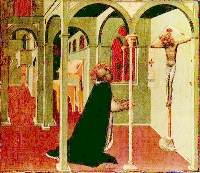
Summa Theologiae:
References on asceticism
 Whether prudence about one's own good is specifically the same as that which extends to the common good? Whether it is possible to be dispensed from a solemn vow of continency? Whether those who are guilty of simony are fittingly punished by
being deprived of what they have acquired by simony? Whether virginity is the greatest of virtues? Whether parish priests and archdeacons are more perfect than religious? Whether a bishop may lawfully forsake the episcopal cure, in order to
enter religion? Whether religious who are raised to the episcopate are bound to religious observances? Whether religion implies a state of perfection? Whether every religious is bound to keep all the counsels? Whether perpetual continence is required for religious perfection? Whether it is requisite for religious perfection that poverty, continence, and obedience should come under a vow? Whether the vow of obedience is the chief of the three religious vows? Whether a religious sins mortally whenever he transgresses the things contained in his rule? Whether a religious sins more grievously than a secular by the same kind of sin? Whether it is lawful for religious to teach, preach, and the like? Whether it is lawful for religious to occupy themselves with secular business? Whether religious are bound to manual labor? Whether it is lawful for religious to live on alms? Whether it is lawful for religious to beg? Whether it is lawful for religious to wear coarser clothes than others? Whether there is only one religious order? Whether a religious order should be established for the works of the active life? Whether a religious order can be directed to soldiering? Whether a religious order can be established for preaching or hearing confessions? Whether a religious order should be established for the purpose of study? Whether a religious order that is devoted to the contemplative life is more excellent than on that is given to the active life? Whether the religious life of those who live in community is more
perfect than that of those who lead a solitary life? Whether one ought to be bound by vow to enter religion? Whether one who is bound by a vow to enter religion is under an obligation of entering religion? Whether he who has vowed to enter religion is bound to remain in religion in perpetuity? Whether children should be received in religion? Whether one ought to be withdrawn from entering religion through deference to one's parents? Whether parish priests may lawfully enter religion? Whether it is lawful to pass from one religious order to another? Whether it is praiseworthy to enter religion without taking counsel of many, and previously deliberating for a long time?
Whether prudence about one's own good is specifically the same as that which extends to the common good? Whether it is possible to be dispensed from a solemn vow of continency? Whether those who are guilty of simony are fittingly punished by
being deprived of what they have acquired by simony? Whether virginity is the greatest of virtues? Whether parish priests and archdeacons are more perfect than religious? Whether a bishop may lawfully forsake the episcopal cure, in order to
enter religion? Whether religious who are raised to the episcopate are bound to religious observances? Whether religion implies a state of perfection? Whether every religious is bound to keep all the counsels? Whether perpetual continence is required for religious perfection? Whether it is requisite for religious perfection that poverty, continence, and obedience should come under a vow? Whether the vow of obedience is the chief of the three religious vows? Whether a religious sins mortally whenever he transgresses the things contained in his rule? Whether a religious sins more grievously than a secular by the same kind of sin? Whether it is lawful for religious to teach, preach, and the like? Whether it is lawful for religious to occupy themselves with secular business? Whether religious are bound to manual labor? Whether it is lawful for religious to live on alms? Whether it is lawful for religious to beg? Whether it is lawful for religious to wear coarser clothes than others? Whether there is only one religious order? Whether a religious order should be established for the works of the active life? Whether a religious order can be directed to soldiering? Whether a religious order can be established for preaching or hearing confessions? Whether a religious order should be established for the purpose of study? Whether a religious order that is devoted to the contemplative life is more excellent than on that is given to the active life? Whether the religious life of those who live in community is more
perfect than that of those who lead a solitary life? Whether one ought to be bound by vow to enter religion? Whether one who is bound by a vow to enter religion is under an obligation of entering religion? Whether he who has vowed to enter religion is bound to remain in religion in perpetuity? Whether children should be received in religion? Whether one ought to be withdrawn from entering religion through deference to one's parents? Whether parish priests may lawfully enter religion? Whether it is lawful to pass from one religious order to another? Whether it is praiseworthy to enter religion without taking counsel of many, and previously deliberating for a long time?