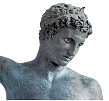
It may be proper here to say a word in explanation of that frank
and innocent nudity which is so characteristic a trait of the best Greek art.
The Greek admiration for the masculine body and the willingness to display it
were closely bound up with the extraordinary importance in Greece of gymnastic
exercises and contests and with the habits which these engendered. As early as
the seventh century, if not earlier, the competitors in the foot-race at
Olympia
dispensed with the loin-cloth, which had previously been the sole covering worn.
In other Olympic contests the example thus set was not followed till some time
later, but in the gymnastic exercises of every-day life the same custom must
have early prevailed. Thus in contrast to primitive Greek feeling and to the
feeling of "barbarians" generally, the exhibition by men among men of the naked
body came to be regarded as something altogether honorable. There could not be
better evidence of this than the fact that the archer-god, Apollo, the purest
god in the Greek pantheon, does not deign in Greek art to veil the glory of his
form.
 F. B. Tarbell, A History of Ancient Greek Art